|
|
||||||||



|
|
IKAR in Mass MediaRussia turns to giant plastic bags to store unexported grain as Black Sea trade stallsMOSCOW, Nov 11 (Reuters) - With Black Sea drone attacks disrupting trade for the world's biggest wheat exporter, Russian farmers are turning to an innovative — though potentially higher-risk — storage option for their grain crop as traditional silos fall short of their needs. 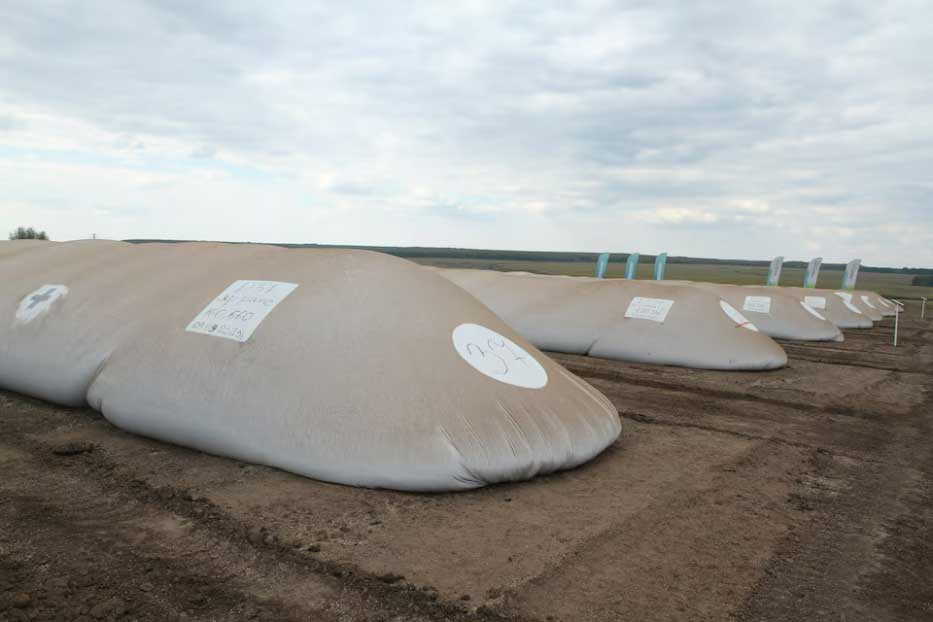 Giant vacuum plastic bags used by farmers to store grain and oilseed crops line a field at the Avgust-Kaibitsy agricultural enterprise in the Republic of Tatarstan, Russia, September 18, 2025. Sibur/Galina Lukoyanova/Handout via REUTERS /File Photo Purchase Licensing Rights Farmers in Russia could store up to one-third of the country's grain exports this year in giant plastic vacuum bags, a storage technology invented in Argentina in the 1990s, sometimes referred to as Argentinian silo bags. These offer a cheap and easy alternative to traditional grain silos and have been widely used in the US and elsewhere. Some were also used in Russia, but uptake has risen sharply as disruptions to exports drove up domestic stocks. Russian grain exports have fallen by about a third of their normal volume since early July after attacks by Russia and Ukraine on each other's ports and vessels led to the closure of one of the world's busiest grain trading routes. Consultancy IKAR estimates the volume of excess unexported grain in Russia this year at up to 20 million tons, which will need to be stored until there is an internationally mediated deal to stop the attacks and resume exports. "We have a substantial increase in the usage of so-called Argentinian silo bags," IKAR general director Dmitry Rylko said. "We think that these bags can take up to 20 million tons of Russian crops." Dmitry Garnov, deputy CEO of Aeon Agro, which owns land in the Penza region in central Russia, told Reuters that the company's use of plastic bags for storage has risen eightfold since 2023 to 180,000 tons, over half of its total production. CONSTANT MONITORING NEEDED But Garnov also said the storage technology has its own risks, as creases or folds can provide access for mice, while special cannons similar to those used at airports are needed to scare away birds. Alla Novikova from the Russian agricultural watchdog's research centre said that storage conditions vary between farms and geographical zones, and constant monitoring of the bags' condition is needed to minimize losses. 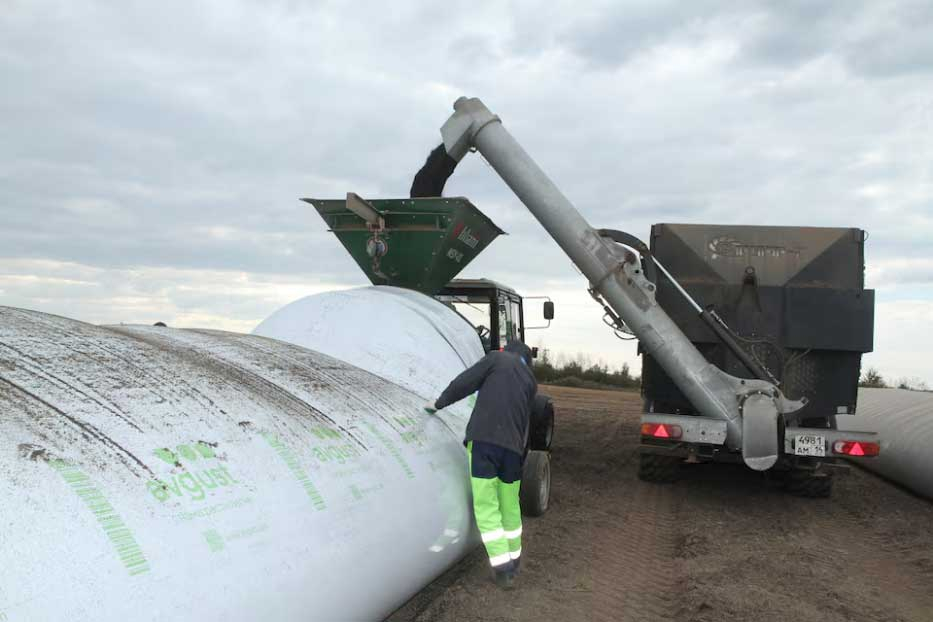 Farmers unload the contents of a truck trailer into a giant vacuum plastic bag used to store grain and oilseed crops in a field at the Avgust-Kaibitsy agricultural enterprise in the Republic of Tatarstan, Russia, September 18, 2025. Sibur/Galina Lukoyanova/Handout via REUTERS/File Photo Purchase Licensing Rights As interest rates in the economy remain high, many farmers cannot afford new investments in long-term storage, such as grain elevators, making the bags the only affordable option even though the losses could be higher. Russia has storage capacity of about 160 million tons, most of it built in the Soviet era, but experts estimate that only 40% meets modern standards, while the rest is only suitable for short-term storage, with high risks of losses. Storage capacity is also spread geographically throughout the vast country and could be out of reach and economically ineffective if it is far away from fields. Plastic bags, in contrast, bring storage capacity to the fields. Central regions and areas around the Volga River, which are farther from the ports on the Black Sea and the Sea of Azov, pioneered use of the bags in Russia because of a deficit of conventional storage capacity. They are now expected to spread elsewhere. "The southern regions have nowhere to go this year but to store excess grain somewhere," Garnov said. "I think this technology will go there now." 10 MILLION TONS OF GRAIN ALREADY STORED IN BAGS Three companies in Russia launched production of giant sausage-shaped grain bags between 2020 and 2025. Each bag can store up to 200 tons of grain. Russian petrochemical company Sibur, which supplies polyethylene for the bag producers, said that grain can be stored in them for up to 18 months. Novikova said studies suggest losses from storage in plastic bags and grain elevators are comparable if the bags are properly maintained, although the storage period in bags is shorter. A study in Tatarstan in 2025-26 showed that all five key grains kept in bags maintained their quality, the head of Sibur's agriculture division Maxim Kanunnikov said. The Russian Grain Association estimates that 10 million tons of grain — about 7% of the annual harvest — is already being stored this way. 11 ноября 2026 года Source: Reuters | #grain | Comments: 0 Views: 33
|



|
© 2002—26 IKAR. Institute for Agricultural Market Studies 24, Ryazansky str., off. 604, Moscow, Russia Tel: +7 (495) 232-9007 www@ikar.ru |


|
|
|
Language: Russian Google translate:


